This Data Transparency Event has been a key date in the PHUSE calendar for more than six years, and remains a valuable forum for sharing ideas, experiences and emerging best practice.
This year, from 15 to 17 September, 477 attendees from 111 companies across 27 countries came together to explore the latest developments shaping data transparency.
With discussions on clinical trial transparency policy and practice, data privacy and anonymisation, and patient access, data return and transparency tools, the event showcased a wide range of perspectives and expertise, with Q&A sessions driving further conversation.
All presentation slides and recordings are now available on the PHUSE website.
Continue reading for reflections from our event hosts.
Day 1: Regulatory Compliance & Protecting Sensitive Information
Hosted by Devaki Thavarajah, Working Group Lead, Independent
Day One of the Data Transparency Autumn Event examined the challenges of meeting increasing transparency requirements while protecting sensitive information. Across four presentations, speakers covered commercially confidential information (CCI), clinical document and dataset anonymisation, trial blinding, and patient privacy within an evolving regulatory landscape.
Sanjay Bagani of Xogene and Christa Polidori of Regeneron opened the programme by exploring the protection of CCI under EU CTR 536/2014. Their session considered the changing transparency landscape, the challenges sponsors face when identifying and protecting CCI, and practical strategies for incorporating transparency considerations earlier in the clinical development process.
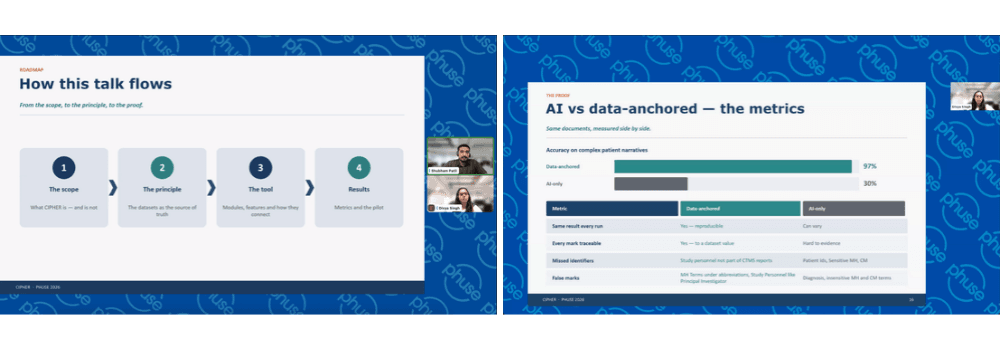
Shubham Patil and Divya Singh of Bristol Myers Squibb then introduced CIPHER, an automated anonymisation tool supporting submissions under EMA Policy 0070 and Health Canada’s PRCI initiative. The presentation demonstrated how structured clinical trial data can be used to consistently identify and anonymise personal data across clinical documents, improving efficiency while supporting regulatory compliance.
Sheetal Bagul and Pramada Shah of GENINVO explored the balance between transparency requirements and maintaining blind integrity in ongoing clinical trials. Their session highlighted the potential risks of inadvertent unblinding and demonstrated how targeted redaction approaches can protect study validity while meeting disclosure commitments.
Rounding off the day’s sessions, Bhargav Koduru and Luke Morgan of Medidata presented a multi-step methodology for de-identifying clinical trial data. Combining risk-based anonymisation techniques with industry data standards, their approach aims to protect patient privacy while retaining traceability, regulatory compliance, and the scientific value of shared datasets.
Across the four sessions, a clear message emerged: transparency and data protection do not have to be competing priorities. Effective governance, standardisation, and technology can help organisations meet growing disclosure expectations while protecting commercial interests, trial integrity and patient privacy.
Day 2: Global Transparency & Evolving Data Use Regulations
Hosted by Abby McDonell, Working Group Lead, Privacy Analytics
Day Two shifted the focus towards the evolving global framework for clinical trial transparency, covering secondary use of data, emerging European regulations, international disclosure requirements, and opportunities to strengthen reporting practices.
Jennifer O’Callaghan of Vivli Europe provided an overview of the European Health Data Space (EHDS) and its new requirements for the secondary use of health data. The presentation considered the challenges data holders may face as implementation progresses, including governance, data accessibility and operational readiness across multiple European jurisdictions.
Katherine Tucker examined key regulatory developments affecting the secondary use of clinical trial data in Europe. Her session covered evolving definitions of scientific research, proposed alignment of data protection requirements across the EU, and emerging anonymisation guidance intended to support compliant data sharing while protecting privacy.
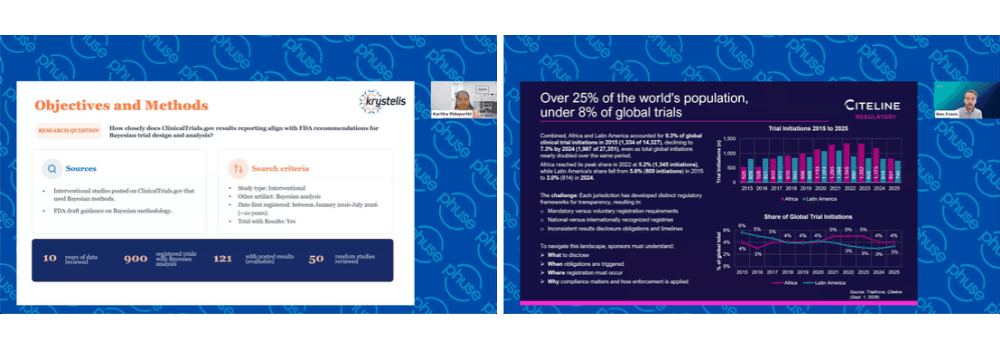
Looking beyond Europe, Benedict Evans of Citeline explored the complex and often fragmented disclosure landscape across Africa and Latin America. Differences in protocol registration, results disclosure, registry expectations and enforcement activities highlighted the importance of maintaining strong regulatory intelligence and region-specific compliance strategies.
The final session from Kartika Pidaparthi and Ankit Gupta of Krystelis considered the growing use of Bayesian methods in clinical trials and the challenges of reporting these studies on ClinicalTrials.gov. Their analysis identified gaps between evolving FDA guidance and current reporting capabilities, while highlighting the potential for more structured reporting to improve transparency and reproducibility.
Together, the sessions demonstrated the increasingly complex nature of global transparency. As requirements develop across jurisdictions and new approaches to data use emerge, organisations need strong governance, up-to-date regulatory knowledge, and adaptable processes to ensure disclosure and data-sharing practices remain compliant and meaningful.
Day 3: Innovation, Patient-Centred Transparency & Operational Excellence
Hosted by Debra Guerreiro, Working Group Project Lead, Johnson & Johnson
The final day focused on making clinical trial information more accessible, meaningful and secure for patients and researchers. The programme explored patient-centred communication, participant data return, disclosure platform validation, and emerging approaches to protecting complex research data.
Nikki Moolman of Bristol Myers Squibb demonstrated how AI can create video plain language summaries (PLSs) of clinical trial results. The AI-enabled workflow transforms approved written summaries into patient-friendly videos, providing another way to reach patients while retaining human oversight and scientific accuracy. The session illustrated how technology can support greater accessibility and engagement with clinical trial results.
Marianna Foos and Kristi Whiteside of Biogen then examined participant data return and the growing importance of providing individual clinical trial data directly to study participants. Their presentation considered how meaningful, interpretable and actionable data can enhance trust, support patient care and promote equity in clinical research. Drawing on external guidance, patient feedback and Biogen’s implementation experience, they highlighted key considerations for successful programmes, including early planning, patient choice, plain language communication, and secure delivery. The session also shared lessons from Biogen’s initiative and demonstrated how participant data return is developing into an important element of patient-centred transparency.
Neha Tickoo and Sonali Parmar of Syneos Health turned the focus to the validation of disclosure platforms, examining the role of transparency writers throughout platform development. Their presentation highlighted how writers bring expertise in disclosure requirements, regulatory expectations and content workflows, and emphasised the value of involving them as active quality partners throughout the platform lifecycle.
The event concluded with Zixin Nie of RTI International, who explored the challenges of de-identifying digital histopathology slide images for research use. The session examined potential sources of identifiable information within whole slide image files and reviewed practical approaches and open-source tools that can support secure data sharing without compromising research value.
The final day’s discussions reinforced the importance of moving beyond compliance towards transparency that delivers meaningful value for patients and researchers. Innovative communication, participant data return, robust disclosure platforms and responsible approaches to sensitive data all have a role to play in building trust and supporting the future of clinical research.


Data Transparency Pavilion: 14–18 March 2027
Continue the conversation at the in-person Data Transparency Pavilion!
Being held at the US Connect 2027, 14–18 March, the Data Transparency Pavilion will be a space for attendees to meet with regulators, sponsors, technology leaders and patient advocates to explore the latest challenges and developments in data transparency.
Stay for Thursday 18 March for dedicated workshops, all included in your standard US Connect ticket.
Review your ticket options and register by 23 October to enjoy the Early Bird discount!
Thank You to Our Sponsors
Looking Ahead

Sponsorship opportunities are available for next year's Data Transparency Autumn Event, offering you a unique platform to showcase your commitment to advancing data transparency.
View the prospectus and Return on Investment Summary for more information. The earlier you sign up, the more exposure you receive!