


The PHUSE US Connect 2026 highlighted the strength and diversity of the Working Groups’ activity through Advance Sessions, the PHUSE Pavilion™, workshops and panel discussions.
The Working Groups shared practical insights, innovative solutions and collaborative approaches addressing key challenges across the clinical research life cycle. Topics spanned data visualisation, open source, data standards, safety analytics, transparency, anonymisation, AI and patient centric communication.
Together, these activities demonstrate the value of the PHUSE Working Group model in advancing best practice, fostering innovation and supporting meaningful progress for the global clinical data community.
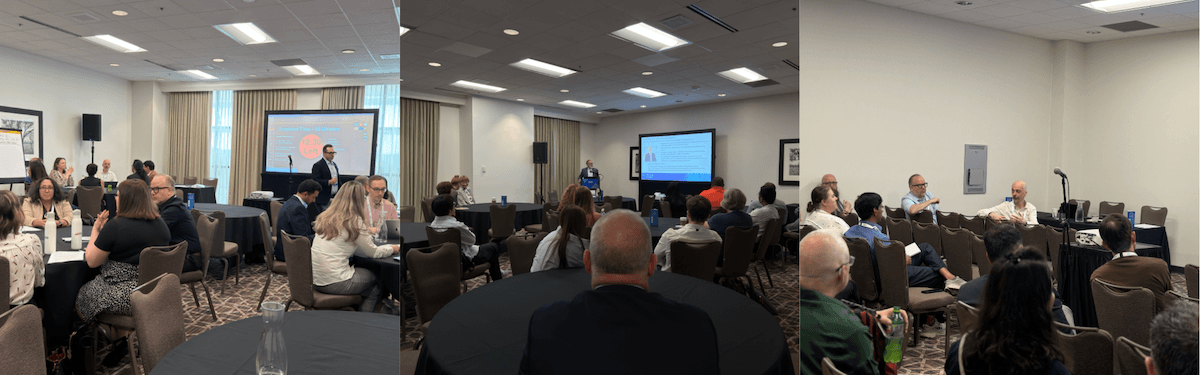
Data Visualisation & Open Source Technology (DVOST) Advance Sessions
The Data Visualisation & Open Source Technology Working Group hosted three impactful sessions, affirming our commitment to innovation in data visualisation and open source. Dony Unardi, Sam Parmar, Vedha Viyash, Marcin Dubel and Nick Masel led the teal session, sharing updates on Shiny for submission, hands on demonstrations, and new tealFlow features, while encouraging continued community involvement through future hackathons.
Ryo Nakaya (PharmaForest) presented a practical workshop on open source SAS packages, guiding participants through their development and use, followed by an interactive Q&A. Melvin Munsaka (CVARS) provided an in depth overview of safety analytics, illustrating how advanced data visualisation improves efficiency and quality. He traced CVARS’ evolution from concept to its current open source Shiny applications developed in collaboration with FDA reviewers.
Together, these sessions sparked valuable discussion, strengthened community engagement, and highlighted continued momentum for DVOST initiatives.
Optimizing the Use of Data Standards Advance Sessions
We are thrilled to celebrate the success of the Optimizing the Use of Data Standards Working Group’s recent Advance Sessions! It was inspiring to see our Community come together to share transformative updates and spark new ideas. The sessions focused on knowledge sharing across several core projects:
• Building a Better MDR: advancing the design and adoption of metadata repositories
• BIMO FAQ Forum: sharing common questions and answers for BIMO submissions
• Regulatory Referenced Deliverables: improving and aligning vital submission documents
The energy continued with a dedicated New Projects Discussion, where we explored fresh ideas for future areas of focus. Following this, we held a collaborative workshop with the Real World Evidence Working Group, focused on evolving the Data Reviewer’s Guide packages to better support real-world data submissions. A huge thank you to everyone who contributed their expertise and passion.
Emerging Trends & Innovation Advance Sessions
These Emerging Trends & Innovation Advance Sessions explored how biometrics is evolving through practical application of AI and rethinking long‑standing practices.
In Rethinking QC of Clinical Analysis Through Real‑World Scenarios, participants worked through concrete QC scenarios drawn from real clinical analysis settings. Rather than debating theory, the session focused on how QC decisions are made in practice – highlighting common pain points, trade‑offs and inconsistencies. The discussion led to pragmatic insights into where automation, risk‑based thinking and clearer guardrails can strengthen QC while maintaining trust, traceability and regulatory confidence.
The Next‑Gen Biometrics: AI Use Cases That Deliver Real Impact session shifted the focus to identifying AI initiatives for ET&I that move beyond experimentation to deliver tangible value. By discussing (Gen)AI topics, the group surfaced new opportunity areas, with particular interest in (Gen)AI guardrails. Together, the sessions emphasised moving from isolated innovation to scalable, governed and impact‑driven adoption of AI in biometrics.
Safety Analytics Advance Sessions
Several safety-focused sessions were delivered at the US Connect by the Safety Analytics Working Group with strong discussion and engagement. Updates were shared on the Hepatotoxicity Stage 1 and Stage 2 white papers, including progress, challenges and the Hepatotox tool, highlighting the need for additional medical SME input. AI-enabled safety analytics demonstrated how JMP, when integrated with R, Python and AI, can support clinician-led analyses with minimal technical expertise. The PHUSE Safety Library session showed the need for improved outreach, positioning and communication around updates. The PrOACTS project presented early survey insights into organisational safety structures, while the Safety Estimands session demonstrated the value of applying the ICH estimand framework to safety analyses to improve clarity and interpretability.
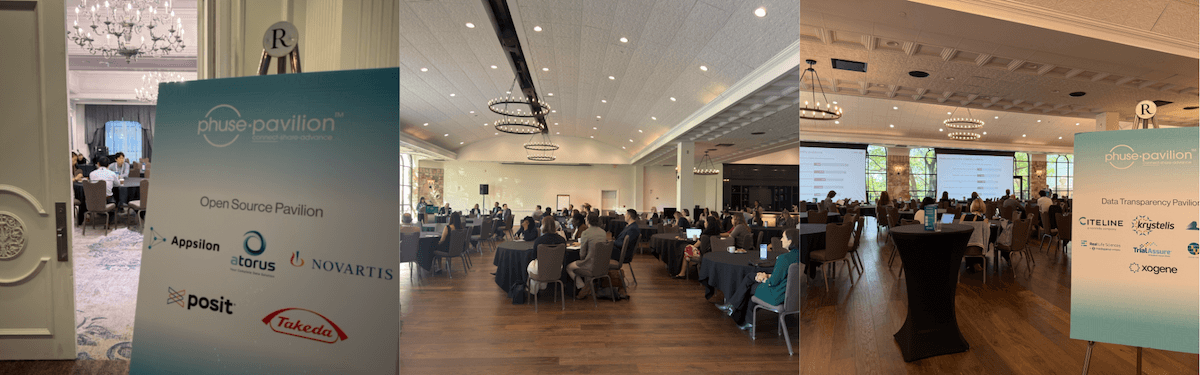
Data Transparency Pavilion
The inaugural Data Transparency Pavilion delivered a clear message: transparency is no longer a standalone compliance activity, but a strategic, system level capability supporting trust, innovation and long term sustainability in clinical research. Across sessions, speakers highlighted the growing interconnection between data sharing, anonymisation, AI and commercially confidential information (CCI) management, alongside increasing regulatory and technological complexity.
Discussions emphasised that patient trust is central to effective transparency, built through clear communication, plain language, proportionate data protection, and accountability for data use. As disclosure expands beyond tabular data to include imaging, wearables, genomics and AI enabled outputs, scalable, risk based anonymisation becomes essential. AI and automation were presented as enablers when supported by domain expertise, quality controls and human oversight. Sessions on CCI reinforced a shift towards lifecycle based, enterprise wide management, positioning transparency as a shared, cross functional responsibility.
Hear from Data Transparency Pavilion Lead Jean-Marc Ferran as he shares the key highlights and standout moments: https://phuse.s3.eu-central-1.amazonaws.com/Events/2026/US+Connect+2026/Pavilion/Data+Transparency+Pavilion+Highlights.mp4
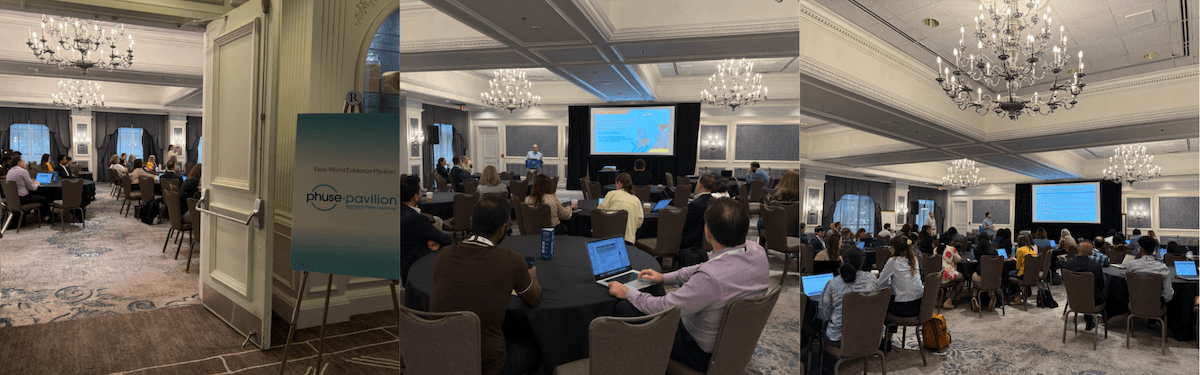
Real World Evidence Pavilion
During this year’s US Connect, the Real World Evidence (RWE) Working Group organised the first two-day RWE Pavilion. The session started with a keynote presentation from Rob DiCicco from TransCelerate, who presented a good overview of the changes in the clinical trial landscape including RWE and patient-centricity aspects. This was followed by an interactive and well-attended panel discussion. Several of the projects organised interactive workshops for real-world data (RWD) mapping to the OMOP standard, estimands for RWE studies, and adjusting the data reviewer’s guide to RWD. In addition, the winners of the RWE challenge presented their AI approach of using RWD efficiently for clinical trials. Finally, the three-hour hackathon on missing data imputations was attended by a dedicated and active group of participants.
Hear from Real World Evidence Pavilion Lead Berber Snoeijer as she shares key takeaways: https://phuse.s3.eu-central-1.amazonaws.com/Events/2026/US+Connect+2026/Pavilion/Real-World+Evidence+Pavilion+Highlights.mp4
Open Source Pavilion
The Open Source Pavilion delivered seven blocks of content alongside a networking session, attracting a diverse audience of experts, practitioners and those new to open source in pharma. A highlight was the interactive ‘Block Party’, which provided a rapid overview of key organisations and initiatives, including pharmaverse, the R Consortium, R/Pharma, and the DVOST PHUSE Working Group. Participants were encouraged to connect, share ideas and explore opportunities for collaboration and new initiatives to support open source transformation.
Another standout session was a facilitated design thinking workshop focused on sustainability, addressing challenges such as orphaned packages and long term support. Participants explored risks and solution strategies for embedding open source tools into clinical data pipelines. Overall, the Pavilion offered a consolidated view of the key considerations, opportunities and challenges the PHUSE Community is addressing as open source adoption continues to grow.
Hear from Open Source Pavilion Lead Michael Rimler as he reflects on the highlights: https://phuse.s3.eu-central-1.amazonaws.com/Events/2026/US+Connect+2026/Pavilion/Open+Source+Pavilion+Highlights.mp4
In addition to the Pavilions and the Advance Sessions, the Working Groups contributed through papers and presentations.
• ET08 – SCE White Paper 2.0: A Modernised Framework for the Next Generation of Data Analysis
• ET09 – Next Generation QC Workflow Optimisation: Current Practices and Future Directions (Emerging Trends & Innovation Working Group)
• OS01 – How R We Now? Tracking Industry Progress in Adopting R and Open Source for Clinical Reporting
• OS10 – The Use of Git in Statistical Programming
Overall, the PHUSE US Connect 2026 showcased the depth and impact of Working Group activity. Across sessions, pavilions and papers, contributors shared practical insights, explored innovation and addressed real‑world challenges, reinforcing the value of collaboration in advancing best practice across the global clinical data community.